
FREE PAYROLL TAX CALCULATOR · 2025 & 2026Social Security
Social Security
Tax Calculator
See the employee Social Security deduction, the selected year’s wage base and how a paycheck crosses the annual limit.
Free calculator · Pay stub documents are a separate paid service.
New Pay Stub Maker · templates from $3.99 ↗
01
Your wage details
Calculate this employee tax on its own.
ESTIMATED EMPLOYEE TAX2026
$4,650.00
Annual employee tax reference
Taxable wage basis annual$75,000.00
Employee Social Security tax only. This does not estimate retirement benefits or take-home pay.
Tax breakdown
Annual| Tax component | Amount |
|---|---|
| Employee Social Security tax · 6.2% | $4,650.00 |
| Total employee tax | $4,650.00 |
Average figures are rounded independently; component sums can differ from the total by $0.01.
Example: $75,000 annual covered wages · 2026
Calculation details
- Annual covered wage limit
- $184,500.00
- Annual employee maximum before per-check rounding
- $11,439.00
- Annual wages subject to tax
- $75,000.00
YOUR RECORDS. YOUR NEXT STEP.
Explore our document tools.
Your calculator is free. When you need a document, use your actual payroll or business records and preview before checkout.
PAY STUB MAKERYour payroll.
Your payroll.
A design that fits.
From$3.99USDper pay stub
Starting price for the Simple template. Other templates and optional extras cost more.
- Preview free
- PDF download after purchase
- No subscription
A FEW OF THE AVAILABLE DESIGNS
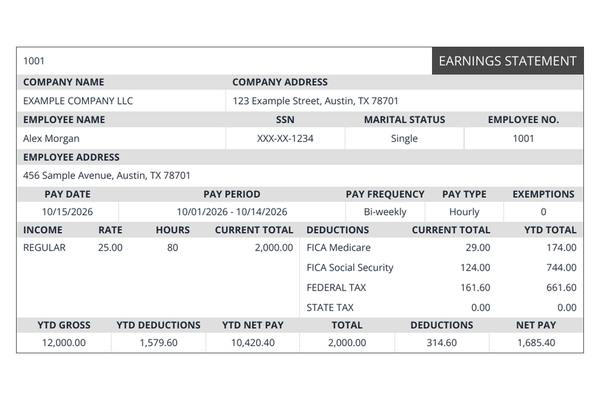
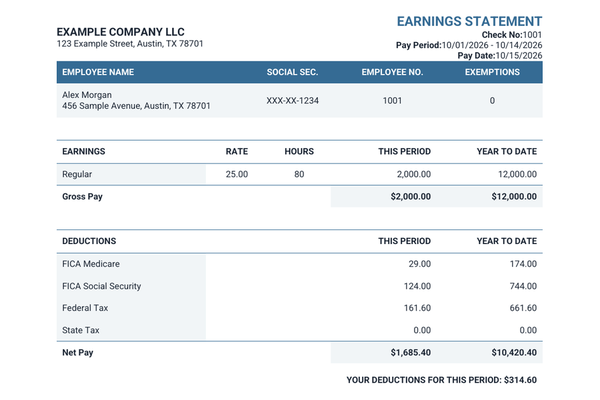
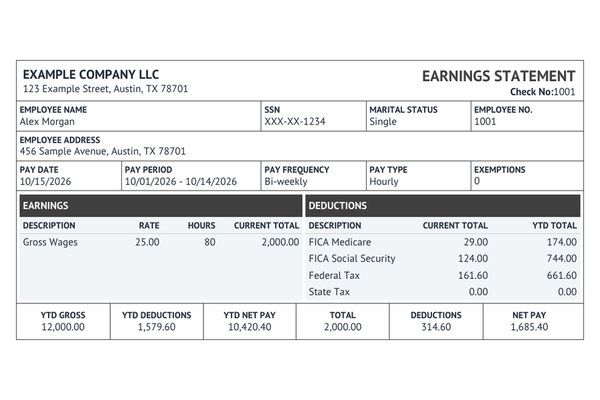
RegularA familiar earnings statement.
ModernA clean, stacked layout.
ClassicA traditional payroll design.
Fictional samples · Template prices vary. Calculations do not transfer automatically into a document.
More tools for your business.
Separate paid document services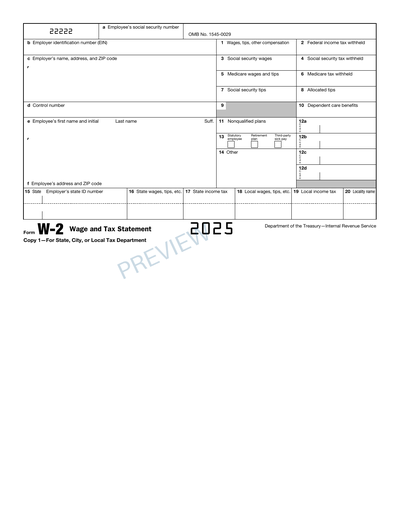
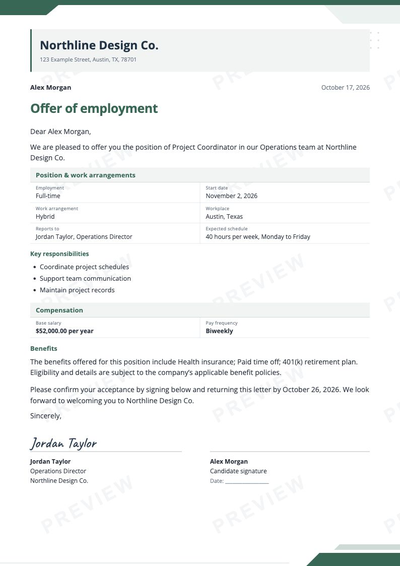
EMPLOYMENT
Offer Letter
Present the role, compensation and agreed terms clearly.
Create an offer letter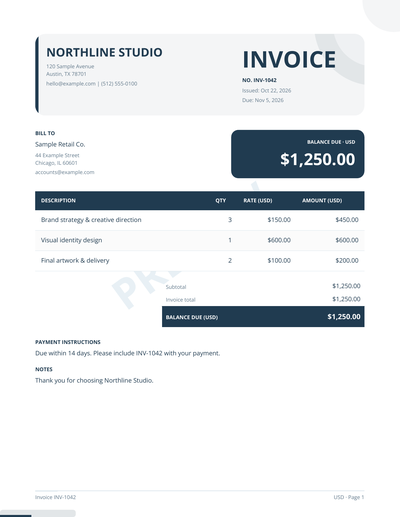
BILLING
Invoice Generator
Itemize your work and set out payment terms in your chosen design.
Explore invoicesEMPLOYEE SOCIAL SECURITY TAX
A fixed rate with an annual wage limit.
Ordinary Social Security-covered employee wages are taxed at 6.2%, up to the calendar year’s wage base. The wage limit changes between 2025 and 2026; the employee rate stays the same.
Annual reference or one paycheck
Annual mode applies 6.2% to the smaller of annual covered wages and the selected year’s limit. It is an annual tax reference before differences caused by rounding individual checks. The pay schedule changes only the displayed average per check.
Paycheck mode first subtracts prior same-employer YTD covered wages from the annual limit. Only the part of this paycheck that fits inside the remaining limit is taxed. Enter the prior balance before this check, from the same employer in the selected year. The default $0 assumes no earlier covered wages with that employer.
Wage coverage and multiple employers
Federal taxable wages and Social Security-covered wages can differ. Use the correct payroll wage basis. Filing status and W-4 credits do not change this employee rate or wage base.
Unrelated employers generally apply the limit separately. If multiple employers withhold more than your annual employee limit, you may qualify for an excess-withholding credit on your return. A single employer’s overcollection is handled differently; see the IRS guidance.
Social Security limits for 2025 and 2026.
| Year | Employee rate | Wage base | Employee maximum |
|---|---|---|---|
| 2025 | 6.2% | $176,100 | $10,918.20 |
| 2026 | 6.2% | $184,500 | $11,439.00 |
Wages above the Social Security limit can still be subject to Medicare and other taxes. Source: Social Security Administration contribution and benefit bases.
CROSSING THE LIMIT · 2026
A $3,000 paycheck near the cap.
With $183,000 of prior covered wages from this employer, $1,500 remains under the 2026 wage base. Of the next $3,000 check, only $1,500 is subject to Social Security tax: $1,500 × 6.2% = $93.00.
With the same wage amounts in 2025, prior wages already exceed that year’s $176,100 limit, so this paycheck’s Social Security deduction is $0.
- 2026 wage limit
- $184,500.00
- This check subject to tax
- $1,500.00
- Employee deduction
- $93.00
Social Security tax FAQs
Does filing status change Social Security tax?
No. The ordinary employee rate and wage base do not depend on filing status, W-4 allowances or federal withholding credits. Special employment exemptions need separate review.
Does the annual maximum include the employer’s share?
No. The amount shown is the employee portion only. Employers generally pay their own matching Social Security share.
Why can actual payroll differ by a few cents?
Annual mode rounds one annual reference calculation. Employers round individual checks, and prior payroll may need reconciliation. This tool does not correct previous withholding.
Is this a retirement or self-employment calculator?
No. It estimates ordinary covered employee payroll tax. It does not estimate benefits, tax on Social Security benefits, railroad retirement tax, self-employment tax, tip collection or special employer arrangements.
CHECK THE DETAILS
Official sources and calculation scope.
The year selector switches the applicable payroll rule set. Wage amounts and optional elections are supplied by you; the tool does not determine which pay or benefits are taxable.
Review date: October 26, 2026. Both years are available on this page. Future changes need a new rule review. Estimates support planning and comparison with records; they do not replace payroll or a complete tax-return calculation.
FROM ESTIMATE TO RECORD
Create your pay stub nowBuild a pay stub from real records.
Use your actual earnings and deductions. Choose Regular or Enhanced and preview before checkout.